
The shortest answer is this: multiply eligible trading volume by the rebate rate that actually applies to the account. If the rebate is expressed as a share of an Introducing Broker’s commission, first calculate the eligible partner commission and then multiply it by the client’s rebate percentage. In compact form: client rebate = eligible partner commission × rebate share. If a provider instead quotes a flat amount per lot, use eligible lots × rebate per lot.
The phrase cara menghitung rebate FBS means “how to calculate an FBS rebate.” The arithmetic is simple only after the rate basis, eligible volume, currency, and settlement rules are known. A rebate is a partial cost refund. It is not trading profit, does not offset market losses one-for-one, and should never be a reason to increase position size or trading frequency.

Before the maths: an India-specific regulatory check
For a reader in India, platform authorisation comes before rebate arithmetic. The Reserve Bank of India says resident persons may undertake forex transactions only with authorised persons and for permitted purposes. Permitted electronic forex transactions must be conducted on an RBI-authorised electronic trading platform or a recognised stock exchange, subject to the applicable rules. See the RBI’s forex transaction FAQ.
The RBI Alert List page version dated October 22, 2024 included FBS. The list identifies entities that are not authorised to deal in forex under FEMA or operate an authorised forex ETP; the RBI also says that absence from the list does not prove authorisation. SEBI separately cautions Indian investors about unregulated foreign trading portals and the loss of domestic investor-protection and dispute-resolution routes.
A cashback or rebate offer is not permission to use a platform. Indian residents should check the current RBI authorised-person list, authorised ETP list, Alert List, instrument, purpose, and exchange route before depositing or trading. This article explains cost calculation only; it is not legal, tax, or investment advice.

What an FBS rebate actually represents
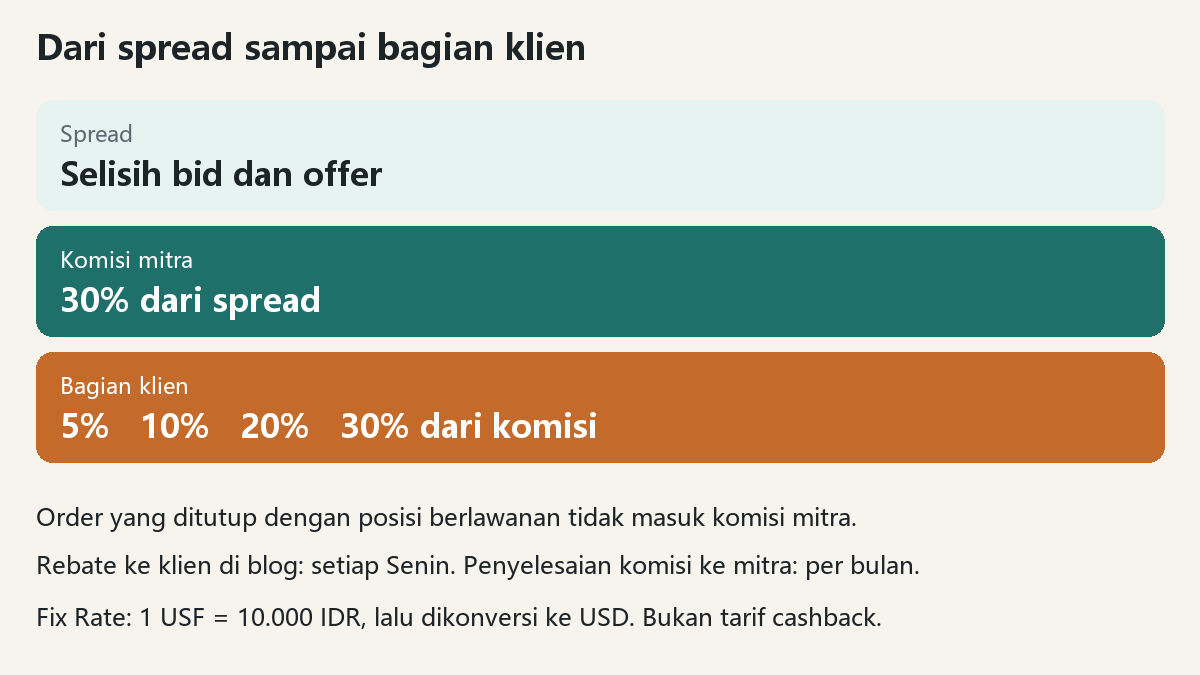
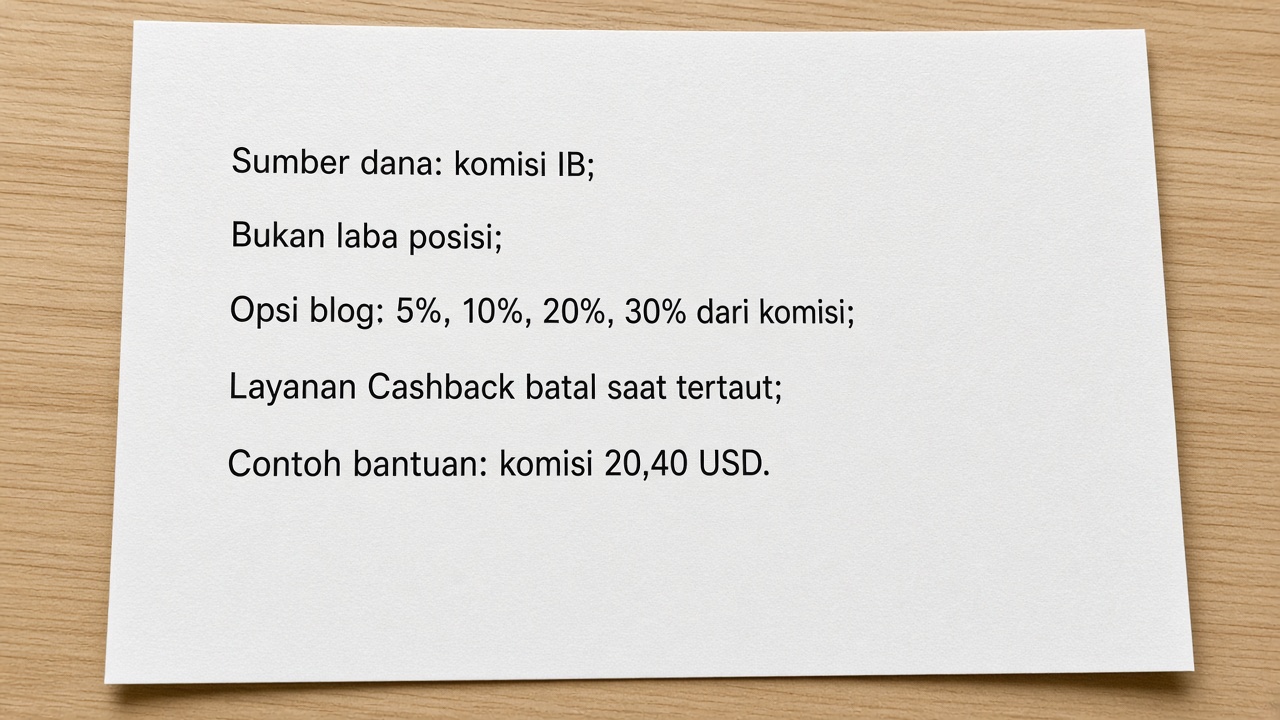
FBS describes rebate as a partial or full refund of spread to a client from a partner within its IB program. The partner chooses what percentage of the partner commission is returned, according to the FBS Help Center’s rebate explanation. This creates two separate amounts:
Partner commission: what the broker credits to the IB under the partner rules.
Client rebate: the agreed share of that commission returned to the eligible client.
Do not substitute one for the other. A headline such as “30% partner commission” does not automatically mean the trader receives 30% of the spread. If the partner shares 70% of that commission, the client’s effective share in this simplified example is 30% × 70% = 21% of the eligible spread value.
A rebate also differs from a deposit bonus. It is linked to qualifying trading activity, while a promotional bonus may have separate credit, turnover, and withdrawal rules. The site’s background explainer on what an FBS rebate is and its FBS cashback workflow give additional context, but the current broker and partner terms remain controlling.
Inputs required before you calculate
Collect these fields from the actual offer or Partner Area:
| Input | Meaning | What to verify |
|---|---|---|
| Eligible volume | Lots that qualify for the rebate | Whether opened and closed positions count, and whether partial lots are included |
| Rate basis | Percentage of partner commission, dollars per lot, or pips per lot | Do not mix these formats |
| Partner commission basis | Spread value and commission-level multiplier | FBS Grade, floating spread, instrument, and any reduction rule |
| Rebate share | Percentage of partner commission passed to the client | Whether it is an account-specific or group setting |
| Account currency | Currency in which the account or rebate is recorded | Conversion rate and conversion fee |
| Eligibility rules | Account, instrument, order, holding, and anti-abuse conditions | Exclusions, reversals, and cancelled credits |
| Settlement rules | Credit date, statement period, and withdrawal terms | Minimum amount, fees, and payment method |
If one field is missing, the result is an estimate rather than a payable amount.
Cara menghitung rebate FBS from partner commission
FBS’s public support material describes the partner calculation as a percentage of the spread, influenced by the partner’s Grade. The official FBS commission guide provides the underlying method. A practical estimate is:
Estimated partner commission = eligible volume × spread value converted to USD × Grade multiplier
Estimated client rebate = estimated partner commission × client rebate share
Combined:
Estimated client rebate = eligible volume × spread value in USD × Grade multiplier × client rebate share
FBS notes that actual commission can differ because spreads float. Its support material also describes a reduction rate when the current spread rises above the relevant average. Therefore, a trader should use the posted statement as the final record, not an average-spread estimate.
Worked example using a percentage share
FBS’s Help Center example uses 5 lots, a spread value of 13.6, and a Grade 1 multiplier of 30%:
Partner commission = 5 × $13.60 × 30% = $20.40
Now assume, purely for illustration, that the IB has set the client rebate share at 70%:
Client rebate = $20.40 × 70% = $14.28
Effective rebate per lot = $14.28 ÷ 5 = $2.856 per lot
The 70% share is an example, not a quoted rate from fbsforexcashback.id or FBS. The actual setting must be checked in the relevant account or offer.
Formula 2: a flat rebate per eligible lot
Some cashback offers simplify the quote to a cash amount per standard lot. In that case:
Estimated rebate = total eligible lots × rebate per lot
Suppose a statement period contains three qualifying trades with 0.80, 0.60, and 0.40 lot. Total eligible volume is 1.80 lots. If the verified rate is $4.50 per lot:
Estimated rebate = 1.80 × $4.50 = $8.10
Do not assume every instrument uses the same contract size or rate. A standard forex lot commonly represents 100,000 units of the base currency, but metals, indices, energies, and other CFDs may use different contract specifications. The offer may also quote a different amount for each symbol or account type.
Formula 3: a pip-based rebate
If the offer is stated in pips per lot, convert the rebate pips into money:
Estimated rebate = eligible lots × rebate pips per lot × pip value per lot
For a USD-denominated account trading a pair where one pip on one standard lot equals $10, an illustrative 0.35-pip rebate on 2 eligible lots would be:
Estimated rebate = 2 × 0.35 × $10 = $7.00
Pip value is not always $10. It changes with the pair, lot size, quote currency, account currency, and current exchange rate. Confirm the symbol’s contract specification and use a pip calculator before treating this result as reliable.
Converting an estimated rebate to Indian rupees
First calculate the rebate in its settlement currency, then convert it:
Estimated INR rebate = rebate in USD × illustrative USD/INR rate
Using the $8.10 flat-rate example and an intentionally illustrative rate of ₹84 per US dollar:
Estimated INR rebate = $8.10 × ₹84 = ₹680.40
This is not a live exchange rate. The amount received may differ because the payment provider can use another conversion rate, apply a spread or fee, or settle in a different currency. For comparison, keep both the original-currency figure and the net INR amount actually received.
How rebate changes net trading cost
The most useful question is not “How much cashback did I receive?” but “What proportion of my eligible trading cost did it offset?”
Gross transaction cost = spread cost + trading commission + swap/financing + measurable slippage
Net transaction cost after rebate = gross transaction cost − confirmed rebate
Rebate coverage ratio = confirmed rebate ÷ eligible transaction cost × 100
Assume the same activity produced $18 of spread cost, $6 of explicit commission, $3 of overnight financing, and $2 of measured slippage. Gross cost is $29. With an $8.10 confirmed rebate:
Net cost = $29 − $8.10 = $20.90
Coverage ratio = $8.10 ÷ $29 × 100 = 27.9%
That does not mean the strategy became profitable. If trading losses were $120 before costs, an $8.10 rebate reduces the total loss by $8.10; it does not erase the market loss. Rebate should be recorded as a cost offset, separate from strategy gross profit and loss.
A reusable calculation sheet
For each settlement period, record:
Account number or internal label.
Instrument and account type.
Open and close dates.
Traded volume.
Eligible volume accepted by the program.
Rate format and rate.
Estimated rebate in settlement currency.
Confirmed rebate credited.
Conversion rate and fees.
Net amount received in INR.
Difference between estimate and confirmed credit.
The site’s forex rebate calculator can speed up a per-lot estimate, while its position-size calculator addresses risk sizing. These are different jobs: a rebate calculator estimates a refund; a position-size calculator helps cap exposure. Neither establishes eligibility, authorisation, or a guaranteed payment.
Why the actual credit may be different
An estimate can differ from the posted rebate for legitimate reasons:
The spread was floating rather than equal to the average used in the estimate.
A reduction rate or other commission adjustment applied.
The partner’s Grade changed for the calculation period.
The client rebate percentage was changed or applied only after a certain time.
Some orders, instruments, accounts, or partial volumes were ineligible.
The system counted volume differently from the trader’s spreadsheet.
A trade was reversed, corrected, or not complete by the cut-off.
Account-currency conversion changed the amount.
Payment or withdrawal fees reduced the cash received.
The account was not correctly linked to the relevant partner when the activity occurred.
FBS’s Help Center states that the Rebate page shows the balance, current-week commission, amount to be paid, account settings, and payment history, and describes weekly Monday payments. Treat that schedule as a current-source claim to verify inside the live Partner Area because operational terms can change.
How to reconcile an estimate with a payment
Start with the smallest useful unit: one account, one instrument, and one settlement period. Export or list the trades, total only the eligible lots, and apply one rate basis. Compare that estimate with the account-level payment history.
If the difference is material, check the variables in this order:
Partner linkage and effective date.
Eligibility of each symbol and account type.
Accepted volume and trade-completion rule.
Rebate percentage or per-lot rate.
Spread value, Grade multiplier, and reduction rate.
Currency conversion and fees.
Reversals or corrections.
Keep screenshots or exports from the actual account if you need to raise a support query. AI-generated illustrations and public examples are not payment evidence.
When a larger rebate is not a better deal
A rebate is only one line in the total-cost ledger. A higher headline rebate can still leave a trader worse off if the spread is wider, execution is poorer, financing is higher, conversion is expensive, or withdrawal conditions are restrictive. Compare the net cost under the same instrument, trade size, holding period, and market conditions.
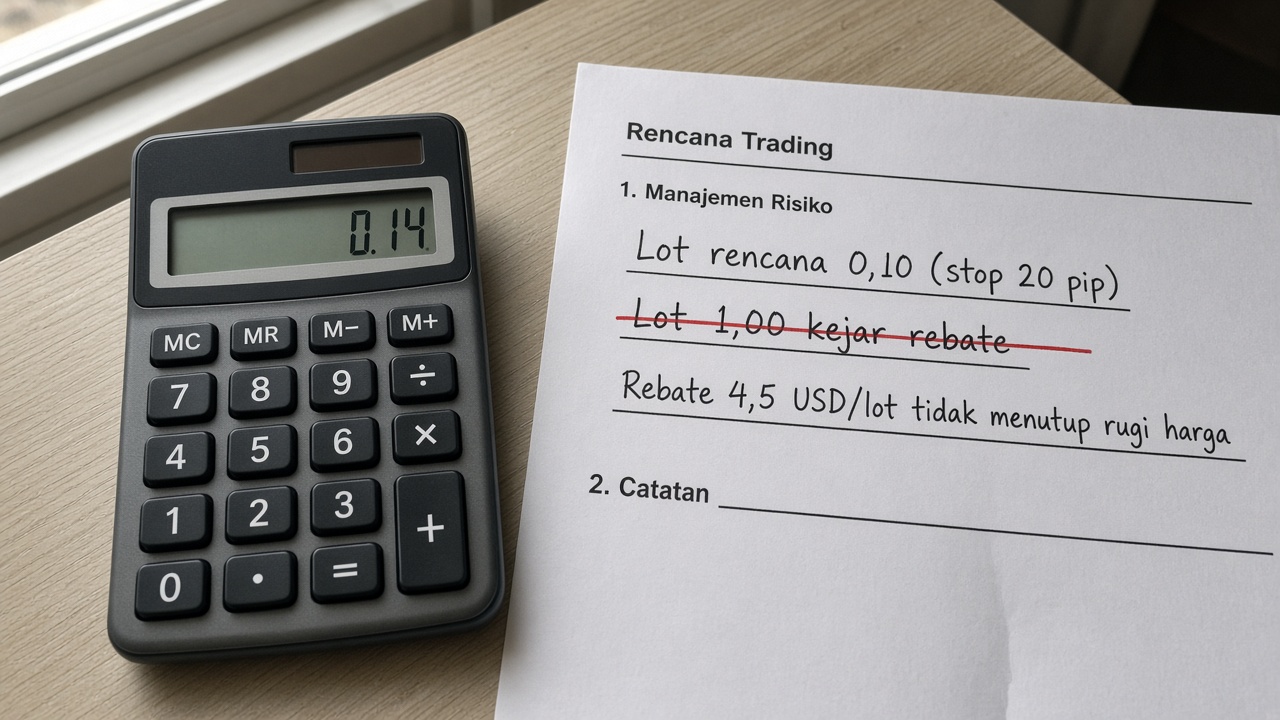
The more serious failure mode is overtrading. If a trader adds one unnecessary standard-lot trade to earn a few dollars of rebate, the additional spread, slippage, volatility, and leveraged loss can exceed the refund. The rational rule is simple: the trade must make sense before rebate. Cashback may reduce the cost of an already-planned, eligible trade; it does not justify a new one.
For Indian residents, regulatory eligibility is a non-negotiable filter. Do not rank cashback offers until you have established that the person, platform, instrument, purpose, and execution venue comply with the rules that apply to you.
A pre-calculation checklist
Verify the current regulatory status for your country and residency.
Confirm the exact legal entity and trading venue, not just a brand name.
Confirm that the account is linked to the intended partner and note the effective date.
Save the current rebate rate and identify whether it is a percentage, cash per lot, or pips.
Check eligible accounts, symbols, order types, and settlement conditions.
Record the account currency, conversion method, and possible fees.
Run a one-period estimate and compare it with the payment history.
Judge the offer by net total cost, not headline rebate.
Keep position sizing unchanged; do not trade for the cashback.
fbsforexcashback.id provides educational explainers, broker pages, and calculation tools. Its About page describes an information-focused service. Readers should still verify any commercial relationship, current rate, account-linking process, privacy terms, and payment conditions before providing personal information or taking action.
Bottom line
To calculate an FBS rebate, identify the quote format first. Use eligible lots × rate per lot for a flat quote; eligible lots × rebate pips × pip value for a pip quote; or eligible spread value × Grade multiplier × client rebate share when the rebate is derived from partner commission. Then convert the confirmed amount into INR and subtract it from eligible trading costs to measure the real effect.
The formula is useful only when the inputs are verified. For a reader in India, regulatory authorisation must be checked before account setup, funding, or trading, and the RBI Alert List finding concerning FBS cannot be treated as a minor footnote. A rebate reduces some costs; it does not create profit, remove leverage risk, or replace compliance checks.
Frequently asked questions
What does “cara menghitung rebate FBS” mean?
It means “how to calculate an FBS rebate.” The basic method is to multiply eligible trading volume by the verified rebate rate, then apply any relevant commission share and currency conversion.
What is the simplest FBS rebate formula?
For a flat rate, estimated rebate equals eligible lots multiplied by rebate per lot. For a partner-commission share, estimated client rebate equals eligible partner commission multiplied by the client rebate percentage.
Is the FBS partner commission the same as the client rebate?
No. The partner commission is paid to the IB under the broker’s partner rules. The client rebate is the portion the partner chooses to share with an eligible client.
How do I calculate a rebate quoted in pips?
Multiply eligible lots by the rebate pips per lot and by the pip value per lot. Pip value varies by pair, lot size, quote currency, account currency, and exchange rate.
Does one lot always produce the same rebate?
No. The rate can vary by instrument, account type, partner setting, spread, Grade, and eligibility rules. Contract sizes also differ outside standard forex pairs.
Why is my actual rebate lower than my estimate?
Possible causes include ineligible trades, floating spreads, a reduction rule, a Grade or rate change, an incorrect linkage date, partial-volume treatment, conversion, fees, or payment corrections.
Can I calculate the rebate in INR?
Yes. Calculate it in the settlement currency first, then multiply by the applicable conversion rate. Compare the result with the net INR amount received after conversion spreads or fees.
Does a rebate make a losing trade profitable?
Not necessarily. A rebate is usually much smaller than the market movement on a leveraged position. It reduces eligible cost but does not cancel trading loss.
Should I trade more to earn more rebate?
No. Extra turnover creates spread, commission, slippage, financing, and market exposure. An otherwise unnecessary trade can cost far more than its rebate.
When is an FBS rebate paid?
FBS’s public Help Center describes weekly Monday rebate payments. Verify the current schedule, cut-off, and payment history in the relevant account because terms can change.
Is FBS authorised for resident forex traders in India?
The RBI Alert List page version dated October 22, 2024 included FBS among entities not authorised to deal in forex under FEMA or operate an authorised forex ETP. Check the latest RBI lists and obtain qualified advice for your circumstances before acting.
Does a rebate offer prove a broker is regulated or safe?
No. A commercial incentive does not establish authorisation, regulatory coverage, investor protection, execution quality, or the safety of funds.
What evidence should I keep if the rebate is wrong?
Keep the account-linking confirmation, offer terms, eligible trade export, settlement-period calculation, account currency, payment history, and any support correspondence. These records are more useful than a generic calculator screenshot.